
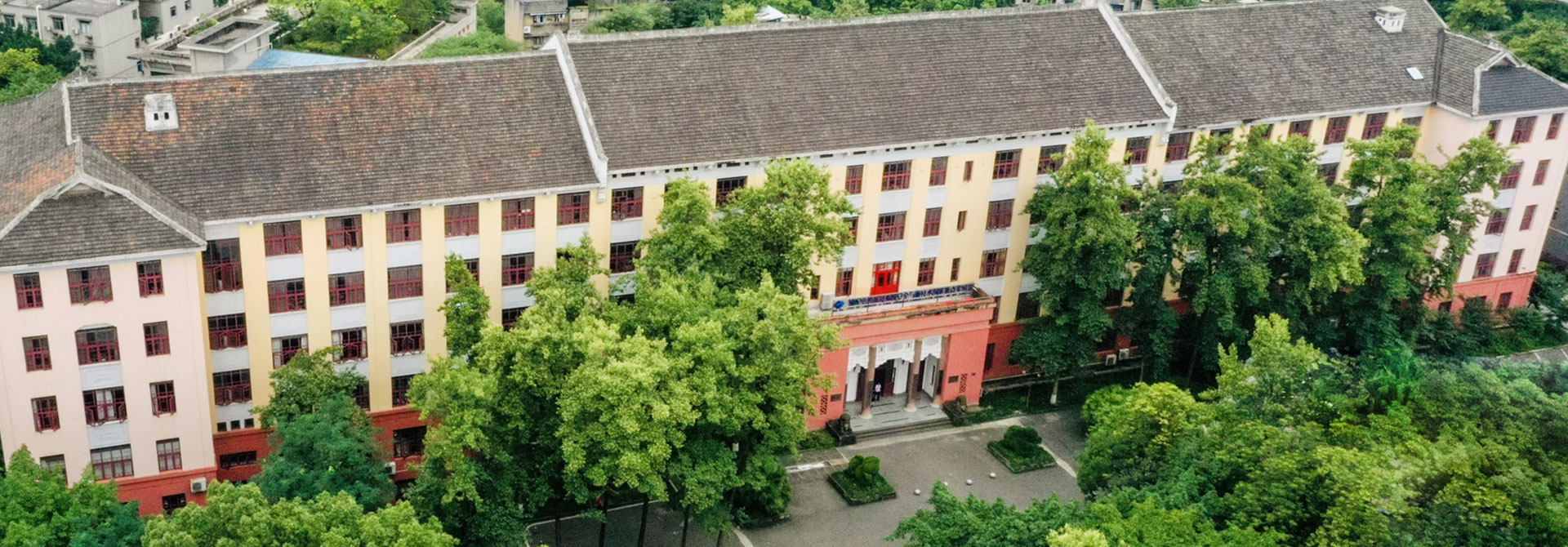
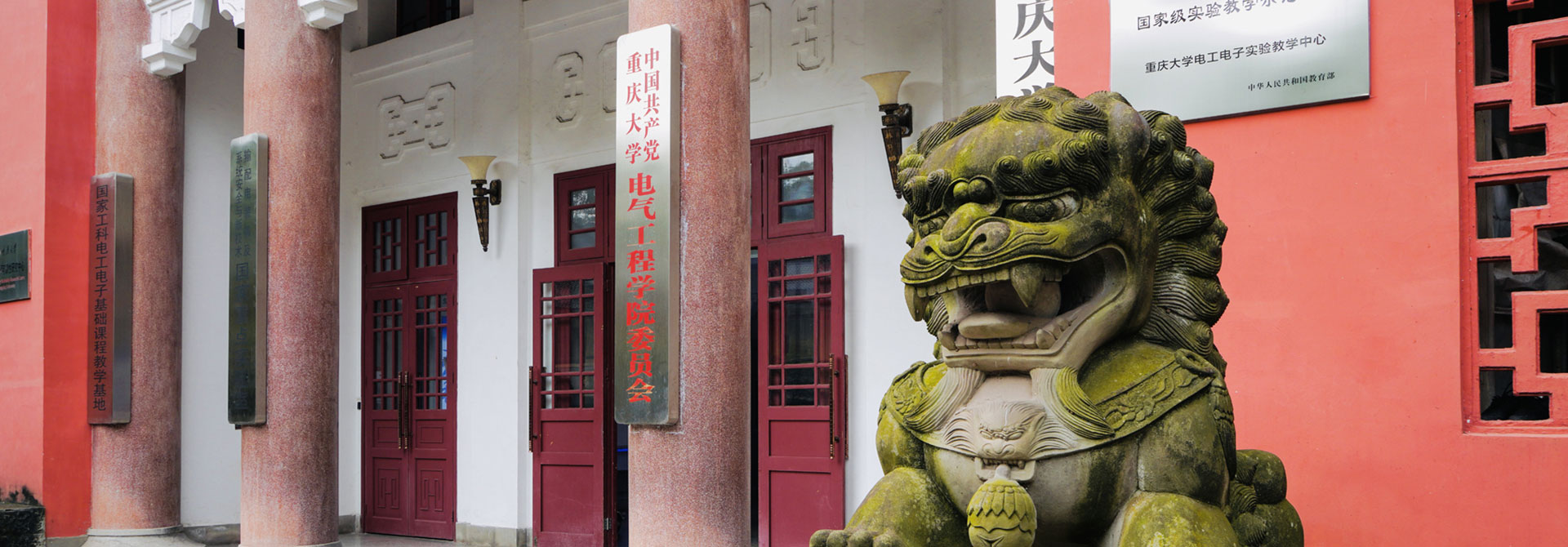




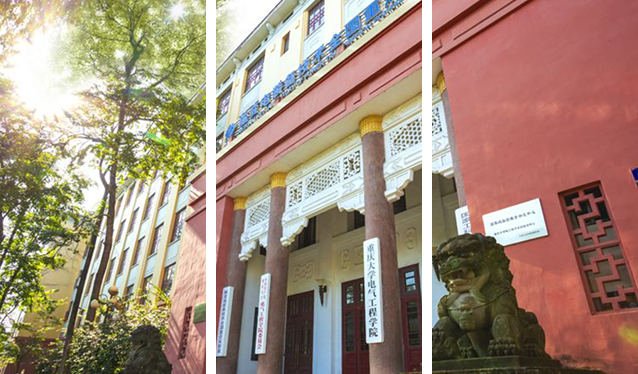
The School of Electrical Engineering at Chongqing University (SEE-CQU) (originally the Department of Electrical Machinery) was established in 1935 and stands as one of the university's oldest and most prestigious schools, enjoying a strong reputation both domestically and internationally. Over its 90-year history, under the leadership of pioneering educators and scientists such as Shui Xiheng , Feng Jian , Min Qijie , Wu Darong , Liu Yilun , Wang Jiqiang , Mao Henian , Jiang Zejia , Gu Leguan , and Sun Caixin , generations of faculty and students have dedicated their passion and hard work to the nation's educational cause, integrating wisdom and responsibility into talent cultivation and economic development.
The school hosts the National Key First-Level Discipline of Electrical Engineering. It ranked 5th in both the 2006 and 2012 national discipline assessments and was rated A- in the 4th round of discipline evaluations in 2017. In 2017, it was selected for the national "Double First-Class" initiative, and in 2022, it was again included in the list of the 2nd-round "Double First-Class" construction disciplines.
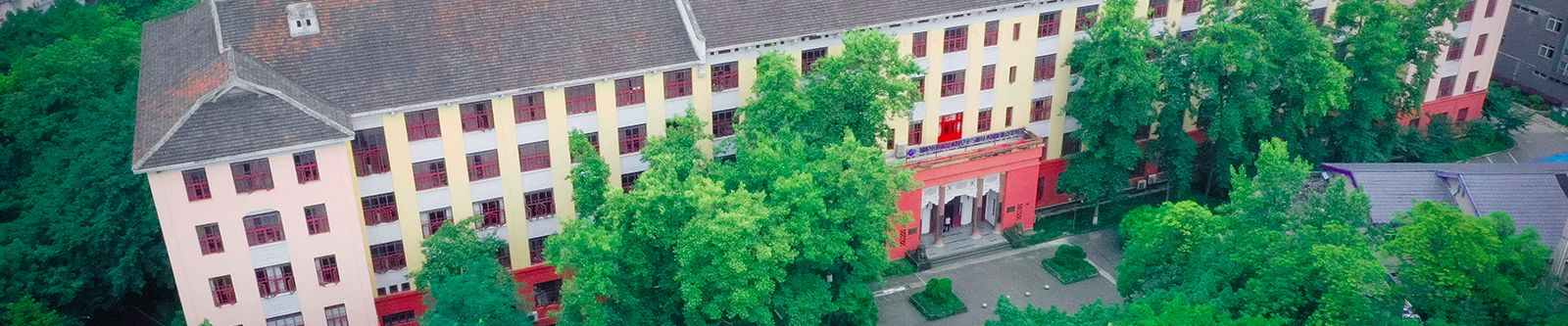


The Electrical Engineering and Automation program is the sole undergraduate major offered by the School of Electrical Engineering at Chongqing University. It was recognized as a National Featured Specialty Construction Site in 2007, became a pilot program under the Ministry of Education's "Excellent Engineer Education and Training Plan" in 2011, was approved as a National First-Class Undergraduate Program Construction Site in 2020, and passed the Engineering Education Professional Certification in 2022.

The school possesses a comprehensive postgraduate training system. It leads the national "Excellent Engineer" master's and doctoral training system construction in the field of smart energy (one of 18 key fields nationwide) and was honored as one of the first national "Excellent Engineer Training Outstanding University-Enterprise Supervisor Groups" (10 groups in total). Guided by the forefront of electrical engineering discipline development and major national demands in power and energy, the school strives to build excellence in postgraduate education, continuously deepening the integration of industry-education collaboration and science-education synergy.
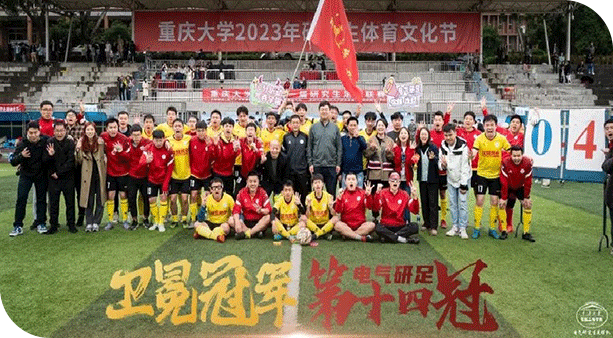
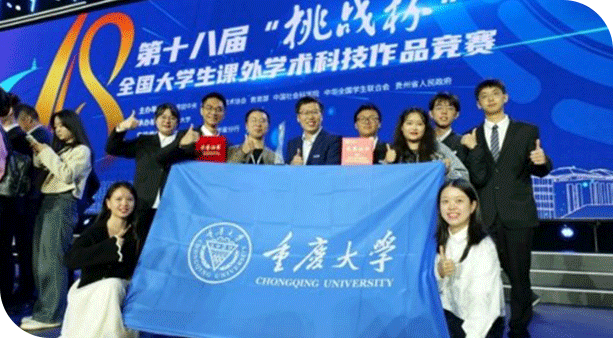
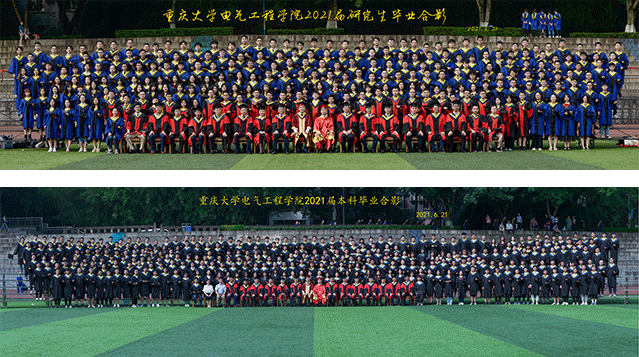
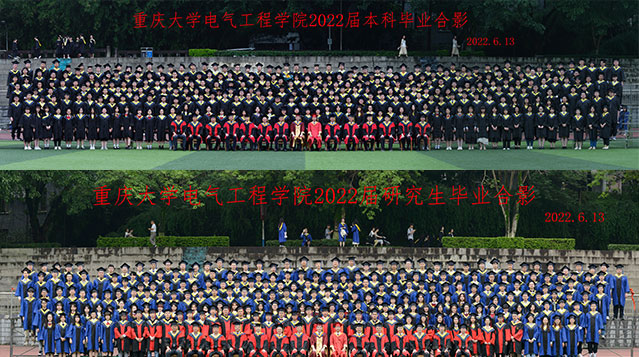
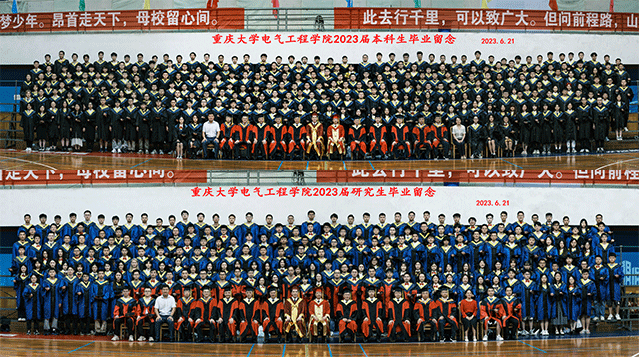
2023届学生合照

The School has nurtured a large number of outstanding talents, including academicians of the Chinese Academy of Sciences and the Chinese Academy of Engineering (such as Yang Shizhong, Sun Caixin, and Li Wenyuan), National Distinguished Engineers, National Model Workers, Elsevier's Highly Cited Chinese Researchers, top 2% scientists globally, and National Upward & Good Youth role models.

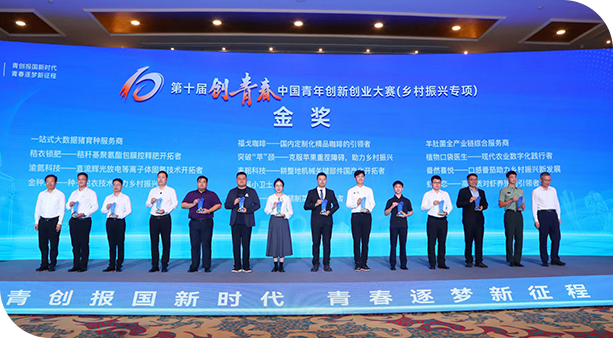
In the past five years, one student was honored as a "Top 100 Graduate Student Party Member Exemplar" among Chinese universities, while three students received the title of "Self-Made Star of Chinese College Students" in the last two years. Students have also achieved nearly 30 national-level awards in innovation and entrepreneurship competitions, including grand prizes and gold medals in events such as the China International College Students' Innovation Competition, the "Chuangqingchun" China Youth Innovation and Entrepreneurship Competition, and the "Challenge Cup" National Undergraduate Academic and Technological Works Competition. Notably, undergraduate student Xiong Jialu, as the leader of the "Magnetic Titanium Technology" project, received a reply letter from President Xi Jinping and was featured twice in the People's Daily. The School's talent cultivation achievements have been highly recognized, leading two national-level first-class teaching achievement awards.


The school currently has 206 faculty members, including 137 full-time teachers (65 with senior professional titles and 47 with associate senior professional titles) and 78 doctoral supervisors. Guided by the spirit of educators, the school has fully implemented the Outline for the Construction of a Powerful Country in Education (2024–2035), earnestly advanced the Soul-Forging and Teacher-Strengthening Initiative, and committed itself to building a high-quality, professional teaching workforce. By deepening the strategy of strengthening the school through talent development, remarkable achievements have been made in the construction of its teaching staff. Among the faculty, there are 1 Foreign Academician of the Chinese Academy of Engineering, 1 Fellow of the Royal Academy of Engineering, 3 IEEE Fellows, 12 national-level talents, 14 national-level young talents, 7 internationally renowned scholars, and 77 person-times of provincial and ministerial-level talents. The school also boasts 1 Innovative Research Group supported by the National Natural Science Foundation of China, 1 National Teaching Team, 1 Huang Danian-style Teacher Team in Chinese Universities, and 1 Changjiang Scholar Innovation Team under the Ministry of Education.
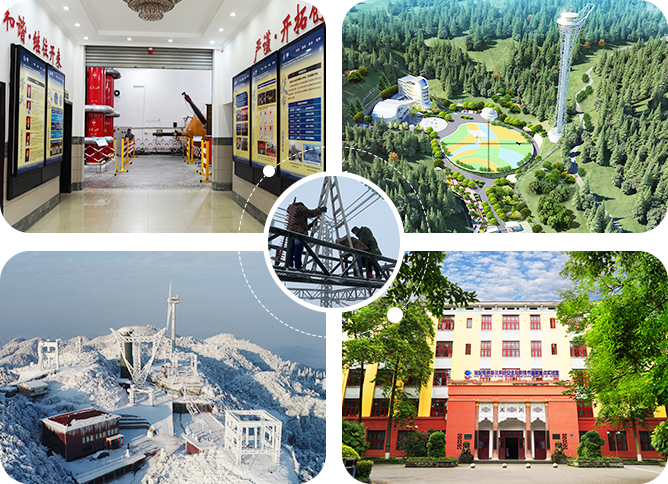



In recent years, aligned with China’s "Dual Carbon" strategy and addressing national priorities in energy development and new power system construction, the school has established joint research centers/institutes in collaboration with leading research institutions and industry partners, including: Huairou National Laboratory, State Grid Corporation of China, China Southern Power Grid, China Electric Equipment Group, COMAC (Commercial Aircraft Corporation of China), Dongfang Electric Corporation. Through these partnerships, the school integrates cutting-edge research with industrial applications, pooling resources to advance innovation in science-industry synergy.


The school hosts a National "111" Innovation and Intelligence Base. It has established close cooperative relationships and regular academic exchange mechanisms with renowned international universities such as University of Warwick, University of Manchester, Imperial College London in the UK, and Nanyang Technological University in Singapore. The school has four international collaborative research platforms in the fields of Atmospheric Structure Icing & Anti-Icing Technology, Bulk Power Grid Reliability Assessment, Renewable Energy Conversion System Reliability, Intelligent Information Processing, creating a favorable international collaborative environment for building high-level research platforms and key disciplines.

The school founded the International Conference on High Voltage Engineering and Application (ICHVE), which was upgraded in 2016 to become a flagship international academic conference fully funded by IEEE-DEIS. It also established the first international academic award in the field of high voltage engineering, the IEEE Caixin Sun & Stan Grzybowski Award. Additionally, the school initiated the high-level international journal "Space Solar Power and Wireless Transmission." In collaboration with 12 universities in the Chengdu-Chongqing region, the school launched the "Chengdu-Chongqing Economic Circle Smart Energy Forum," regularly inviting international academic leaders to deliver lectures.
The school actively promotes joint education programs and has established multi-level international talent cultivation initiatives covering doctoral, master's, and undergraduate studies. Partner institutions include University of Cambridge, University of Oxford, University of Warwick, University of Manchester, University of Bristol in the UK; University of Tokyo in Japan; Politecnico di Torino in Italy; National University of Singapore; and University of Melbourne and University of Sydney in Australia. For international student cultivation, the school has strengthened cooperation with Belt and Road countries, innovating collaborative models. Examples include enrolling Laos-directed students in partnership with China Southern Power Grid and implementing non-degree training programs in smart grid technologies with Malaysia.
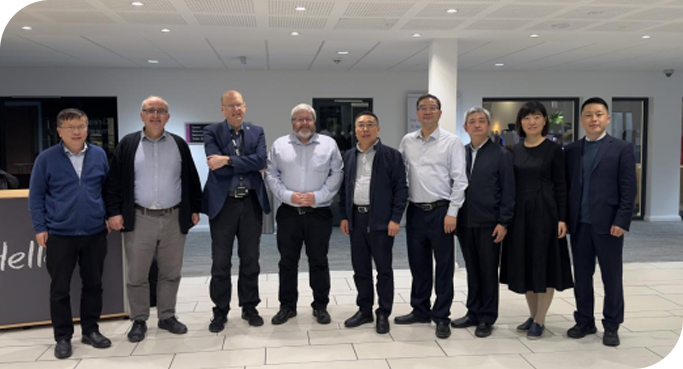
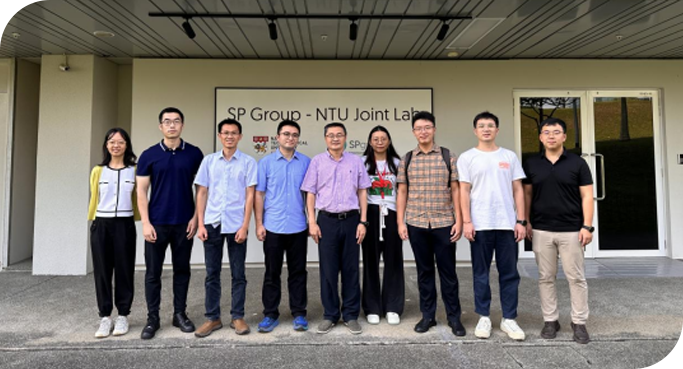
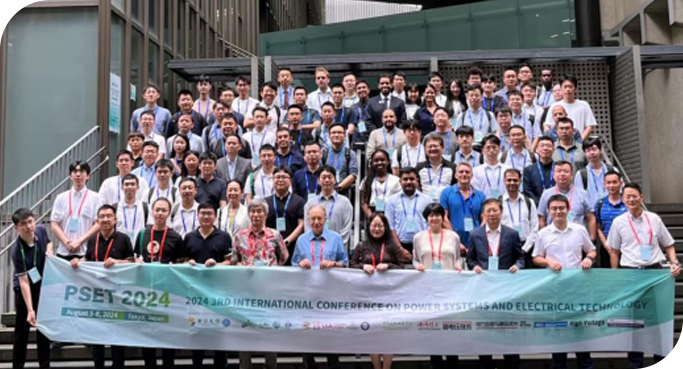
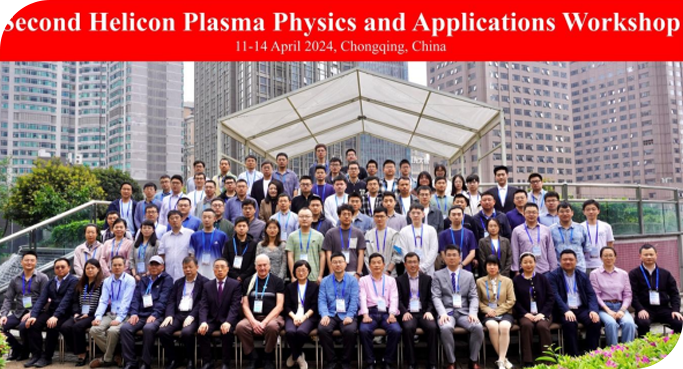
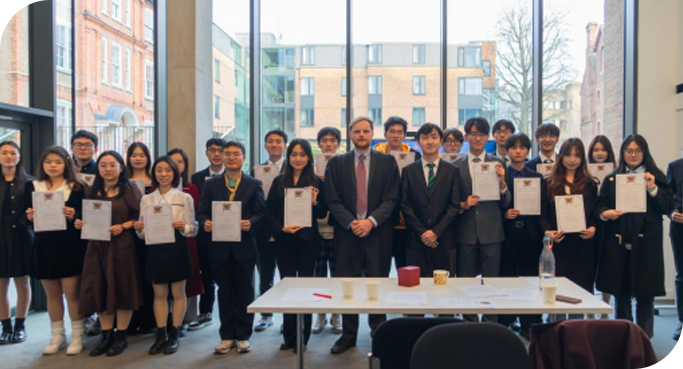
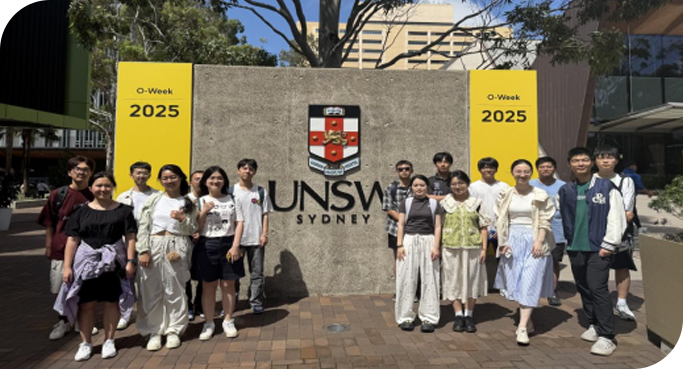
国际交流合照


The school remains true to its original aspiration of fostering virtue and nurturing people, educating talents for the Party and the nation, and upholds the fine tradition of "hard work and rigorous scholarship" forged by electrical engineering professionals over the past ninety years, supporting the high-quality development of the discipline in an all-round and whole-process manner.
Focusing on promoting the spirit of educators and scientists, the School Party Committee has made systematic plans and continued intensive efforts to build a cultural product system with the "Three Ones" ("One History, One Legacy, One Base") as the core and multiple extended "N" cultural products. Since the publication of the reader Footprints in 2016, the official release of Footprints - A Brief History of the Development of the School of Electrical Engineering, Chongqing University in 2025 has provided teachers and students with vivid teaching materials to understand, love and inherit the legacy of the school. By creating and staging the ethics-themed drama Guanghua, compiling and publishing Original Aspiration – Academician Sun Caixin of the Chinese Academy of Engineering and other works, it has guided teachers and students to integrate self-value realization with serving the nation through stories of people around them. Breaking through the limitations of traditional classrooms, the school has built the Xuefeng Mountain National Field Station as a tangible frontier position for ideological and political education, and gradually expanded it into a new "dual-base" model of Xuefeng Mountain-Wulong Station, realizing the deep integration of scientific research scenarios and educational functions. The station receives more than one thousand study tours and visits annually. The school has continuously created cultural products such as the documentary article Looking Up to the Noble, Following the Virtuous Path – In Memory of Mr. Jiang Zejia's Upright and Simple Life, the short documentary series "Devotion to the Nation, Strengthening China with Me", as well as the school history wall, morality education exhibitions, and the column "My Electrical Story", forming a spiritual and cultural matrix of "Electrical Pioneers".
The social influence and educational effectiveness of the school's Party building brand have been significantly improved. The school has successively won a number of national honors, including "National Model Party Branch for Party Building Work", "Huang Danian-style Teacher Team in National Universities", and "Advanced Collective of the National Education System". It has been selected into the third batch of Chongqing University Party Building "Double Creation" Model Departments for cultivation and construction. Several faculty members have been awarded the National May 1st Labor Medal, National March 8th Red Banner Bearer, National Innovation Pioneer Award, National Excellent Scientific and Technological Worker, National Most Beautiful Field Scientific and Technological Worker, and three faculty members have received the Commemorative Medal for the 70th Anniversary of the Founding of the People's Republic of China.
The College carries out the fundamental task of cultivating virtues and cultivating people, adhering to the school-running purpose of "studying academics, cultivating talents, inspiring the countryside, inspiring society" and the school motto of "enduring hardship, being frugal, studying hard, and loving the country", taking the training of electrical engineering professionals who lead and control the future as the foundation, deepening cultural inheritance and innovation, We will build a first-class teaching staff that meets the new requirements of the new era, train first-class and top-notch innovative talents, raise the level of international education, and build a high-level research and innovation plateau. Guided by major scientific and technological tasks, we will produce first-class scientific research achievements, serve the “Chengdu-Chongqing economic area”, the new land and sea channel in the west, and modern new Chongqing, and promote the construction of the "the Belt and Road" and high-quality economic and social development.
(Updated: April 2026)

- Ours Link
- Chongqing University State Key Laboratory International Office School of International Education Graduate School of Chongqing University
- Contact us
-
Address: No.6 teaching building, district a, Chongqing University, 174 shazheng
street, Shapingba District, Chongqing
Postcode: 400044
Tel: 023-65102434
Technical support: Chongqing Giant soft Technology